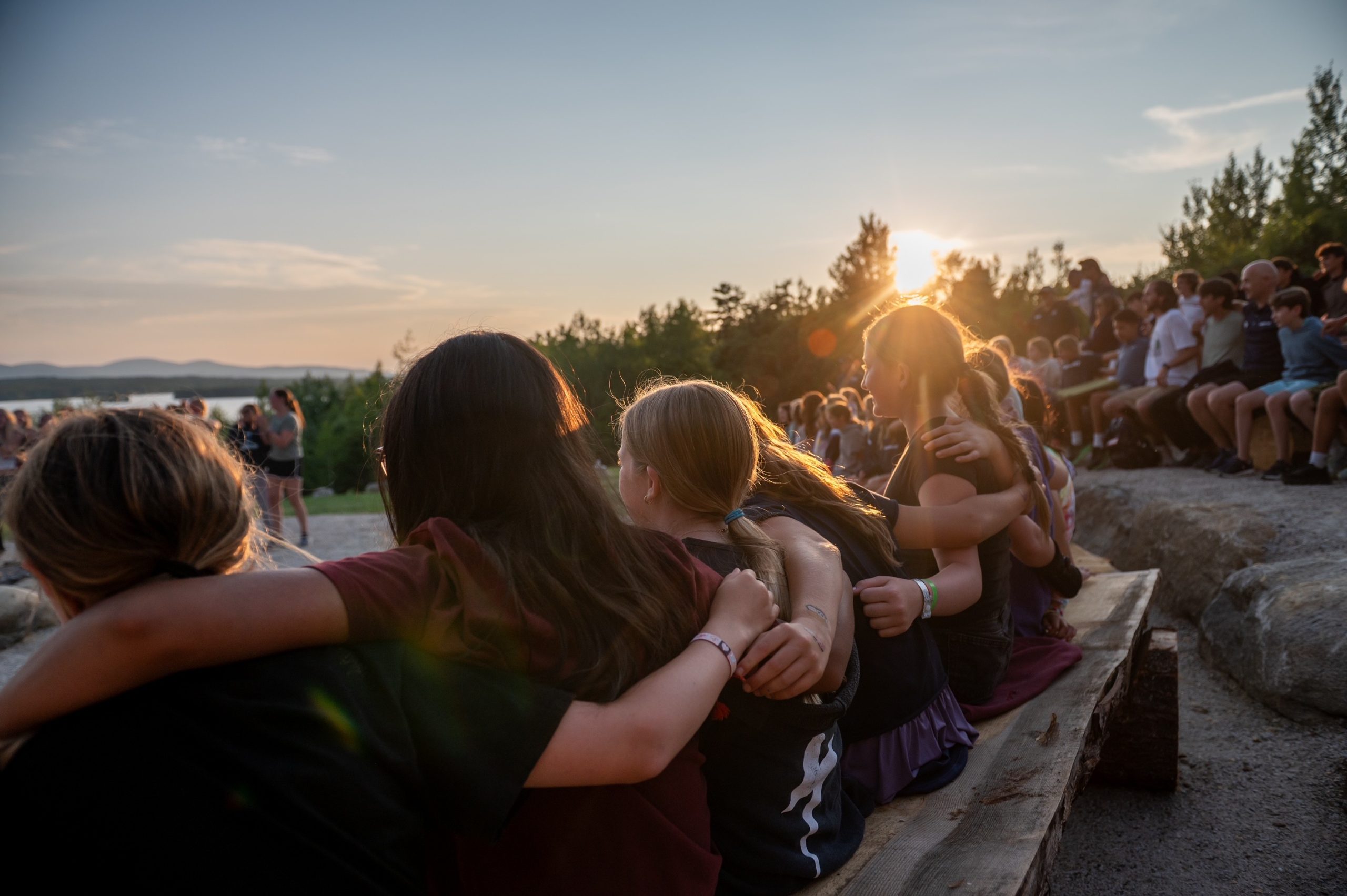
The Analog Advantage: Why a Screen-Free Summer is More Vital Than Ever

In today’s world, our children are growing up in a digital landscape that is more immersive than ever. For our teenagers, it’s the constant pull of the smartphone. For younger children, it’s often the addictive loop of an iPad or gaming console. As a parent, you know the digital noise that follows our children everywhere.

As the Director of Birchmont, I see our screen-free policy not as a restriction, but as a profound gift to both campers and staff. It is perhaps the most significant feature we offer. When we remove the devices, we create space for something much more valuable: Presence.

In my leadership role within the American Camp Association, we frequently discuss the “Digital Detox” that camp provides and the research which backs this up. As Vice President of the New York State Camp Directors Association, legislators in Albany recently asked us what we thought about the state’s proposed smartphone ban in schools. Our reaction was, “How did it take this long?”

To camp professionals, the decision to keep phones and digital devices out of our programs always seemed obvious. We are glad that the research is beginning to catch up. We have always known that the greatest growth happens when a child’s primary interface is other human beings, not a piece of electronic equipment.

Here is why the “unplugged” summer at Birchmont is the ultimate setting for your child’s growth and development.

1. Reversing the “Phone-Based Childhood”

In his recent work, The Anxious Generation, Jonathan Haidt discusses the shift from a “play-based” childhood to a “phone-based” childhood, noting the rise in anxiety as children spend more time in virtual spaces and less time in the physical world. At Birchmont, we intentionally reverse this trend.

By trading the iPad for a paddle and the phone for a campfire, we return children to a play-based environment. This isn’t just about fun; it’s about brain health. When children engage in real-world play, they develop the executive function and social resilience that simply cannot be simulated on a screen.

2. From Emojis to Eye Contact

Social-emotional learning is at the heart of the Birchmont experience which is embodied by our first core value: Community. When a camper is in a bunk, they have to navigate the nuances of a cabinmate’s mood, the humor of a counselor, and the dynamics of a group in real-time.

In a digital world, you can mute a difficult conversation or hide behind an avatar. At Birchmont, our campers learn to read body language, practice active listening, and resolve conflicts face-to-face. These are the skills that stay with a child forever, and they are built on our ballfields and under our pine trees.

3. Breaking the High-Dopamine Loop

For children, the constant drip of dopamine from a tablet or a video game can make the real world feel slow or uninteresting. A Digital Detox allows their nervous systems to recalibrate.

Instead of looking for the next digital ping, they start to find joy in the shimmer of the lake or the cool New Hampshire breeze. One of my favorite things to do is lead campers on a short “silent hike,” asking them to listen to the sounds of the woods around them. It’s amazing how much they hear that they have never noticed before. The curiosity of what certain sounds are leads to a whole new phase of discovery.

Shifting from high-dopamine digital loops to the slow-burn satisfaction of mastering a new skill, like sailing or woodworking, builds a level of focus and mental clarity that is becoming increasingly rare and more valuable in our modern world.

4. The Power of Authenticity

The pressure to perform for a camera or curate a perfect digital life is exhausting for teens. When everyone is unplugged, that pressure disappears.

This allows our campers to be their most authentic selves. They can be silly, they can try a new sport without fear of a fail video being shared, and they can live entirely in the moment. This always hits home at the first DJ social where kids are a bit reticent to dance at first. But by the end of the summer, they are letting loose and living by the adage “dance like no one is watching” because no one is! At Birchmont, the only status updates that matter are the ones you share in a letter home or with your group around the campfire.

The Director’s Perspective

We are only a few days into the summer, but Kristie and I are already seeing that transformation happen. The habit of reaching into a pocket to pull out a phone that isn’t there is already disappearing just three days into camp. Very quickly, our campers and staff are becoming so deeply immersed in our community and all there is to do that they forget what they might be missing on their iPad or phone.

A screen-free summer isn’t about being old-fashioned; it is about helping our kids prepare for the challenging environment of our modern world where distractions are everywhere. By giving your child a few weeks to live an analog life, you are helping them build the resilience, social intelligence, and mental focus they need to lead in the real world.

Yours in Camping,

Will Pierce

Owner/Director, Pierce Camp Birchmont

The Birchmont Pillars: How We Build a Summer of Significance

Confident paddleboarding summer campers at Camp Birchmont in New Hampshire

In the world of summer camping, people often focus on the “what”. The beautiful lake, or if the tennis courts are lit, or the number of activities. But at the best camps, like Birchmont, the most important focus is on the “why.”

Everything we do is built upon two foundational pillars: Community and Confidence. These aren’t just abstract ideas; they are active principles that guide every interaction, from the moment a camper steps off the bus and attends the lighting of their first campfire at Firelight, to the final embers of our closing campfire at Candlelight.

As I look toward the upcoming season, I want to share how these two pillars define the Birchmont experience.

Pillar I: Community

“There are no strangers within, only friends waiting to be met.”

Our camp motto is boldly emblazoned on a large sign right in the front of camp and is often the first thing everyone who arrives at Birchmont sees. But its true power lies in how our campers and counselors live it every day. In a world that can often feel fragmented, we provide a space where belonging is the default setting.

Building a true community is an intentional act. In my role as a speaker at American Camp Association conferences, I often speak about the intentional social architecture of camp. At Birchmont, this means:

  • The Bunk Family: Creating a micro-community where children learn to support one another, share space, celebrate each other’s successes, resolve conflicts when they arise, and lift each other up after a failure.
  • Being Part of Something that is Larger than Themselves: From our youngest campers to our most veteran staff, there is a shared thread of tradition in which we all partake. At our first campfire this summer, I will be sure to mention that 75 years ago, campers who are now older than their grandparents sat around this very same fire doing exactly what we are doing now. Imagining people their grandparents’ age as children always blows a few young minds, but it also makes everyone realize that they are part of something much larger than themselves.
  • Inclusivity by Design: We teach our campers that true friendship isn’t a closed circle; it’s an open invitation. When we are in a safe space to remove the barriers of strangerhood, we can allow children to develop the social intelligence and empathy that will serve them for a lifetime.

Pillar II: Confidence

“What would you attempt to do if you knew you would not fail?”

At our very first Quiet Hour of the summer, we ask every camper this question. It is a challenge to set a goal for their time with us; not a goal defined by achievement, but one defined by the courage to make the attempt.

True confidence isn’t the absence of fear; it is the willingness to try something new despite it. We believe that a premier camp experience should be a brave space to take safe risks. We create an atmosphere where the stakes start off low, but the rewards of personal growth are high.

  • The Freedom to Fail: Whether it’s climbing to the top of the rock wall or auditioning for the camp play, we encourage campers to stretch. Because we have first built a supportive Community (Pillar I), campers can feel confident enough to take those risks.
  • Competence Leads to Confidence: When a child learns to hit a golf ball or get up on waterskis, they aren’t just gaining a skill; they are gathering evidence of their own capability.
  • The Goal-Setting Journey: By asking that Quiet Hour question, we empower campers to take ownership of their summer. We aren’t telling them who to be; we are asking them to ask themselves who they want to become.

The Director’s Perspective

When you combine a welcoming Community with the pursuit of Confidence, magic happens. You see a camper who arrived hesitant suddenly making a new friend or performing in the talent show. You see a child who was unsure of their swimming ability suddenly passing their deep-water test.

Kristie and I believe that these two pillars are what make Birchmont summers so transformative. We don’t just want our campers to have a great summer; we want them to return home with a stronger sense of who they are and a deeper appreciation for the people around them.

As we prepare for the 2026 season, I invite you to ask your own child that same question: “What would you attempt to do if you knew you would not fail?” Their answer might be the start of their greatest summer yet.

Yours in camping,

Will Pierce

Owner/Director, Pierce Camp Birchmont

The Gift of Confidence: Navigating the “Pre-Camp Jitters”

Nervousness For First-Time Campers

There is a specific moment every June, usually just as the trunks are being packed, when the excitement of summer suddenly meets a wave of “What ifs?”

As the Director of Birchmont and a lifelong camp professional, I want you to know that this is a completely natural and expected part of the camp experience. Whether it is a child’s first summer or their fifth, pre-camp nerves are a sign that your child realizes they are about to embark on something significant. For parents, this is often the first real test of the season. You want them to be brave, but your heart aches when they ask, “What if I miss you too much?”

In my leadership role with the American Camp Association, other camp directors and I often discuss this moment as when the camp experience for a child truly begins. As camp professionals, we know that the greatest growth happens when a child stretches beyond their comfort zone; these feelings are the beginning of the developmental arc that allows camp to be such an impactful experience.

We expect children to encounter and overcome some level of homesickness; our staff are trained for it, and the experience is built to allow your child to have their first success at being truly independent. But as a parent, your job is to provide the steady ground from which they launch. The power of camp to bolster a child’s independence and confidence starts with the partnership between camp and home.

Below is my advice on how to talk about homesickness and nervousness to ensure your child has a successful camp experience.

1. Validate the Feeling, But Don’t Join the Worry

When a child says they are nervous, a natural inclination may be to minimize the concern by saying something like, “Don’t be silly, you’ll love it!” While well-intentioned, this can make a child feel like they aren’t being heard.

Instead, try something along the lines of: “It’s totally normal to feel nervous about something new. Even I get butterflies before the first day of camp! But I also know how much fun you’re going to have with your new friends on the lake.” You are acknowledging the emotion without giving it the power to stop the journey. If you or a family member has camp or similar experience, this is a great opportunity to share how you had the same feelings but then had a great experience once you were settled in.

2. Avoid the “Pick-Up Deal”

This is perhaps the most vital piece of advice I can offer. Never tell a child, “Try it for a week, and if you don’t like it, I’ll come get you.”

In the camping profession, we call this the “Bailout Clause”, and it can become a self-fulfilling prophecy. It inadvertently tells the child that you don’t believe they can succeed. When the first inevitable wave of homesickness hits, your child won’t focus on making a new friend, talking to their counselor, or engaging in activities—they will focus on the “deal” to go home without ever giving the camp experience a chance.

Instead, talk to them about their “camp family”. Explain that at Birchmont, they aren’t just a camper; they are part of a community that looks out for one another. Reassure them: “There might be moments where you miss home, and that’s okay. But you have a whole camp family and counselors there to help you through it. I know you can do this.”

As parents ourselves, Kristie and I often serve in this surrogate parent role for children who may be homesick. Please let your camper know that if they are having trouble, they can come talk to us just like they would to their Mom or Dad. One of the most rewarding parts of our job as camp directors is helping a child get through those first few days to then see them return to camp for many happy summers.

3. Focus on the “Firsts”

To pivot from nervousness to excitement, talk about the specific “firsts” they are looking forward to. Is it the first time they’ll hit a bullseye in archery? The first campfire s’more? The first time they see the Milky Way and the stars in the light-pollution-free New Hampshire sky? Shifting the conversation toward these tangible milestones helps them visualize success rather than focusing on the unknown.


The Director’s Perspective

Homesickness isn’t a “problem” to be fixed; it’s a milestone to be managed. It is actually a beautiful sign that your child has a home they love. By navigating those feelings and coming out the other side, your camper will develop a level of resilience that stays with them long after the buses return home from camp.

At Birchmont, we are ready for them. We pride ourselves on creating an environment where every child feels seen and supported, and I can’t wait to see your child grow this summer.

Yours in camping,

Will Pierce
Owner/Director, Pierce Camp Birchmont

Introducing Will & Kristie Pierce

Dear Birchmont Families and Friends,

After 37 wonderful summers directing Birchmont, it is with great joy that we announce that we’ll be turning over the reins to our son, Will, and his wife, Kristie. As they assume the directorship of Birchmont we could not be more confident in this transition of leadership. As a 4th Generation camp director, Will brings a lifetime of experience and skill to his new role and for the last 12 years, Will and Kristie have been working side by side as directors of Pierce Country Day Camp, America’s first and finest day camp.

Although this is a bittersweet moment, this will not be goodbye. Laura and I will spend our summers at Birchmont as Directors Emeriti for the foreseeable future assisting Will, Kristie and the entire Team in any way that we can to ensure the seamless transition of our beloved Birchmont. We have seen campers grow into young adults, staff members and now parents of 2nd and 3rd generation campers, how fortunate we are! As we look back over the many years, the countless memories, interactions, challenges, and thousands of friendships – these are the cherished keepsakes we’ll carry with us always.

We are thrilled to be a part of the excitement and enthusiasm of this next generation to lead Birchmont!

We’ll see you around Camp,

Laura and Greg