Scheduling Unscheduled Time at Camp, And Why It Is Essential

In our modern, high-achieving world, a child’s life is often a masterpiece of logistics. Between competitive sports, music lessons, or tutoring, every hour of their day is optimized for achievement. At the same time, game consoles and on-demand TV often usurp free play and are constantly present to fill the gaps that used to be filled with some of the boredom that led children into self-directed play. As a result, the “free play” that defined previous generations has shrunk to a much smaller part of childhood and can sometimes feel like a luxury to today’s child.

At Pierce Camp Birchmont, we certainly have a robust and professional schedule of activities. However, we also believe that some of the most profound growth happens during our intentionally scheduled blocks of unstructured time.

Whether it’s the “Rest Hour” that occurs every day after lunch, smaller breaks around meal times, or our dedicated “Option Sunday” afternoons, these blocks of time are a vital part of the Birchmont curriculum. Here is why providing unscheduled time in a child’s schedule is essential for their development.

1. Free Play Is The Engine of Creativity

When a child is handed a tablet or a pre-set activity, their imagination is in the passenger seat. But when a group of campers is given an hour of unstructured time, their creativity takes the wheel.

I’ve watched campers turn a few fallen branches into an elaborate village or invent their own sports. A perennial favorite at Birchmont is “Roof Ball”, a game that wasn’t created by a coach or a director, but emerged naturally from the campers themselves during their free time. This isn’t just passing time; it is the development of divergent thinking. By having the space to decide what to do next, children learn how to generate their own ideas rather than just consuming the ideas of others.

2. Building Social Intelligence in the Gaps

During Rest Hour, children are the primary navigators of their own social world. They are allowed to rest in the bunk, roam freely within their respective camp areas (Boys’ Camp or Girls’ Camp), or engage in spontaneous pickup games of tennis or basketball.

In these moments, children mediate their own interactions and organize the fun. Campers have to negotiate the rules of their games, decide who is on which team, and resolve the small, daily frictions of communal living. These unstructured moments are where true social intelligence is built. Campers learn the art of compromise, the value of leadership, and how to read the room—skills that are increasingly rare in an over-monitored world.

We train our counselors to allow this to happen and to only intervene and guide as necessary. Sure, this actually creates a little more work for us since managing this time is slightly more complex than organized activities, but we feel that the benefits it provides our campers and the depth it brings to the camp experience is well worth it.

3. Developing Executive Function

Executive function is the ability to plan, organize, and execute tasks. In an overscheduled life, a child’s executive function often goes dormant because someone else (a parent, a coach, a teacher) is doing the planning for them.

During Option Sunday, a camper has to ask themselves: “How do I want to spend my afternoon? Who do I want to play with? What equipment do I need to ask for?” This self-directed planning is a major milestone in a child’s journey toward independence. It allows them to practice being the “CEO of their own time” in a safe, supportive environment.

4. Recalibrating the Nervous System

Unstructured time allows for a mental reset. In a world of constant performance and external evaluation, children need moments where nothing is being graded or tracked.

This isn’t about doing nothing; it’s about doing something purely for the joy of it. Whether it’s a quiet conversation between cabinmates on the bunk porch, reading a book under a tree, or a spontaneous game of catch, this downtime reduces the performance anxiety that so many children carry today. It teaches them that their value isn’t just tied to their achievements, but also to their presence and their friendships.


The Director’s Perspective

We want our campers to leave Birchmont as creators, not just participants.

As a child development professional, the irony of scheduling unscheduled time is certainly not lost on me. By protecting these blocks of unstructured time, we are giving our campers the chance to discover their own interests, build deeper friendships, and learn that they have the internal resources to navigate their own world.

We provide the setting and the safety, but the campers provide the magic. I can’t wait to see what games and memories they create this summer in the “white space” of Rest Hour, Option Sunday, and all those little moments camp provides for kids to just be kids.

Yours in camping,

Will Pierce

Owner/Director, Pierce Camp Birchmont
The Analog Advantage: Why a Screen-Free Summer is More Vital Than Ever

In today’s world, our children are growing up in a digital landscape that is more immersive than ever. For our teenagers, it’s the constant pull of the smartphone. For younger children, it’s often the addictive loop of an iPad or gaming console. As a parent, you know the digital noise that follows our children everywhere.

As the Director of Birchmont, I see our screen-free policy not as a restriction, but as a profound gift to both campers and staff. It is perhaps the most significant feature we offer. When we remove the devices, we create space for something much more valuable: Presence.

In my leadership role within the American Camp Association, we frequently discuss the “Digital Detox” that camp provides and the research which backs this up. As Vice President of the New York State Camp Directors Association, legislators in Albany recently asked us what we thought about the state’s proposed smartphone ban in schools. Our reaction was, “How did it take this long?”

To camp professionals, the decision to keep phones and digital devices out of our programs always seemed obvious. We are glad that the research is beginning to catch up. We have always known that the greatest growth happens when a child’s primary interface is other human beings, not a piece of electronic equipment.

Here is why the “unplugged” summer at Birchmont is the ultimate setting for your child’s growth and development.

1. Reversing the “Phone-Based Childhood”

In his recent work, The Anxious Generation, Jonathan Haidt discusses the shift from a “play-based” childhood to a “phone-based” childhood, noting the rise in anxiety as children spend more time in virtual spaces and less time in the physical world. At Birchmont, we intentionally reverse this trend.

By trading the iPad for a paddle and the phone for a campfire, we return children to a play-based environment. This isn’t just about fun; it’s about brain health. When children engage in real-world play, they develop the executive function and social resilience that simply cannot be simulated on a screen.

2. From Emojis to Eye Contact

Social-emotional learning is at the heart of the Birchmont experience which is embodied by our first core value: Community. When a camper is in a bunk, they have to navigate the nuances of a cabinmate’s mood, the humor of a counselor, and the dynamics of a group in real-time.

In a digital world, you can mute a difficult conversation or hide behind an avatar. At Birchmont, our campers learn to read body language, practice active listening, and resolve conflicts face-to-face. These are the skills that stay with a child forever, and they are built on our ballfields and under our pine trees.

3. Breaking the High-Dopamine Loop

For children, the constant drip of dopamine from a tablet or a video game can make the real world feel slow or uninteresting. A Digital Detox allows their nervous systems to recalibrate.

Instead of looking for the next digital ping, they start to find joy in the shimmer of the lake or the cool New Hampshire breeze. One of my favorite things to do is lead campers on a short “silent hike,” asking them to listen to the sounds of the woods around them. It’s amazing how much they hear that they have never noticed before. The curiosity of what certain sounds are leads to a whole new phase of discovery.

Shifting from high-dopamine digital loops to the slow-burn satisfaction of mastering a new skill, like sailing or woodworking, builds a level of focus and mental clarity that is becoming increasingly rare and more valuable in our modern world.

4. The Power of Authenticity

The pressure to perform for a camera or curate a perfect digital life is exhausting for teens. When everyone is unplugged, that pressure disappears.

This allows our campers to be their most authentic selves. They can be silly, they can try a new sport without fear of a fail video being shared, and they can live entirely in the moment. This always hits home at the first DJ social where kids are a bit reticent to dance at first. But by the end of the summer, they are letting loose and living by the adage “dance like no one is watching” because no one is! At Birchmont, the only status updates that matter are the ones you share in a letter home or with your group around the campfire.

The Director’s Perspective

We are only a few days into the summer, but Kristie and I are already seeing that transformation happen. The habit of reaching into a pocket to pull out a phone that isn’t there is already disappearing just three days into camp. Very quickly, our campers and staff are becoming so deeply immersed in our community and all there is to do that they forget what they might be missing on their iPad or phone.

A screen-free summer isn’t about being old-fashioned; it is about helping our kids prepare for the challenging environment of our modern world where distractions are everywhere. By giving your child a few weeks to live an analog life, you are helping them build the resilience, social intelligence, and mental focus they need to lead in the real world.

Yours in Camping,

Will Pierce

Owner/Director, Pierce Camp Birchmont
The Birchmont Pillars: How We Build a Summer of Significance

In the world of summer camping, people often focus on the “what”. The beautiful lake, or if the tennis courts are lit, or the number of activities. But at the best camps, like Birchmont, the most important focus is on the “why.”

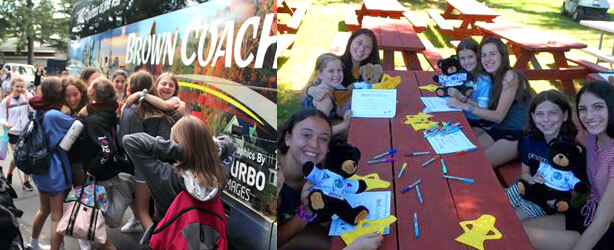
Everything we do is built upon two foundational pillars: Community and Confidence. These aren’t just abstract ideas; they are active principles that guide every interaction, from the moment a camper steps off the bus and attends the lighting of their first campfire at Firelight, to the final embers of our closing campfire at Candlelight.

As I look toward the upcoming season, I want to share how these two pillars define the Birchmont experience.

Pillar I: Community

“There are no strangers within, only friends waiting to be met.”

Our camp motto is boldly emblazoned on a large sign right in the front of camp and is often the first thing everyone who arrives at Birchmont sees. But its true power lies in how our campers and counselors live it every day. In a world that can often feel fragmented, we provide a space where belonging is the default setting.

Building a true community is an intentional act. In my role as a speaker at American Camp Association conferences, I often speak about the intentional social architecture of camp. At Birchmont, this means:

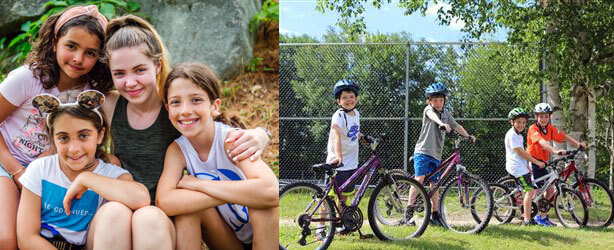
  • The Bunk Family: Creating a micro-community where children learn to support one another, share space, celebrate each other’s successes, resolve conflicts when they arise, and lift each other up after a failure.
  • Being Part of Something that is Larger than Themselves: From our youngest campers to our most veteran staff, there is a shared thread of tradition in which we all partake. At our first campfire this summer, I will be sure to mention that 75 years ago, campers who are now older than their grandparents sat around this very same fire doing exactly what we are doing now. Imagining people their grandparents’ age as children always blows a few young minds, but it also makes everyone realize that they are part of something much larger than themselves.
  • Inclusivity by Design: We teach our campers that true friendship isn’t a closed circle; it’s an open invitation. When we are in a safe space to remove the barriers of strangerhood, we can allow children to develop the social intelligence and empathy that will serve them for a lifetime.

Pillar II: Confidence

“What would you attempt to do if you knew you would not fail?”

At our very first Quiet Hour of the summer, we ask every camper this question. It is a challenge to set a goal for their time with us; not a goal defined by achievement, but one defined by the courage to make the attempt.

True confidence isn’t the absence of fear; it is the willingness to try something new despite it. We believe that a premier camp experience should be a brave space to take safe risks. We create an atmosphere where the stakes start off low, but the rewards of personal growth are high.

  • The Freedom to Fail: Whether it’s climbing to the top of the rock wall or auditioning for the camp play, we encourage campers to stretch. Because we have first built a supportive Community (Pillar I), campers can feel confident enough to take those risks.
  • Competence Leads to Confidence: When a child learns to hit a golf ball or get up on waterskis, they aren’t just gaining a skill; they are gathering evidence of their own capability.
  • The Goal-Setting Journey: By asking that Quiet Hour question, we empower campers to take ownership of their summer. We aren’t telling them who to be; we are asking them to ask themselves who they want to become.

The Director’s Perspective

When you combine a welcoming Community with the pursuit of Confidence, magic happens. You see a camper who arrived hesitant suddenly making a new friend or performing in the talent show. You see a child who was unsure of their swimming ability suddenly passing their deep-water test.

Kristie and I believe that these two pillars are what make Birchmont summers so transformative. We don’t just want our campers to have a great summer; we want them to return home with a stronger sense of who they are and a deeper appreciation for the people around them.

As we prepare for the 2026 season, I invite you to ask your own child that same question: “What would you attempt to do if you knew you would not fail?” Their answer might be the start of their greatest summer yet.

Yours in camping,

Will Pierce

Owner/Director, Pierce Camp Birchmont
The Gift of Confidence: Navigating the “Pre-Camp Jitters”

Nervousness For First-Time Campers

There is a specific moment every June, usually just as the trunks are being packed, when the excitement of summer suddenly meets a wave of “What ifs?”

As the Director of Birchmont and a lifelong camp professional, I want you to know that this is a completely natural and expected part of the camp experience. Whether it is a child’s first summer or their fifth, pre-camp nerves are a sign that your child realizes they are about to embark on something significant. For parents, this is often the first real test of the season. You want them to be brave, but your heart aches when they ask, “What if I miss you too much?”

In my leadership role with the American Camp Association, other camp directors and I often discuss this moment as when the camp experience for a child truly begins. As camp professionals, we know that the greatest growth happens when a child stretches beyond their comfort zone; these feelings are the beginning of the developmental arc that allows camp to be such an impactful experience.

We expect children to encounter and overcome some level of homesickness; our staff are trained for it, and the experience is built to allow your child to have their first success at being truly independent. But as a parent, your job is to provide the steady ground from which they launch. The power of camp to bolster a child’s independence and confidence starts with the partnership between camp and home.

Below is my advice on how to talk about homesickness and nervousness to ensure your child has a successful camp experience.

1. Validate the Feeling, But Don’t Join the Worry

When a child says they are nervous, a natural inclination may be to minimize the concern by saying something like, “Don’t be silly, you’ll love it!” While well-intentioned, this can make a child feel like they aren’t being heard.

Instead, try something along the lines of: “It’s totally normal to feel nervous about something new. Even I get butterflies before the first day of camp! But I also know how much fun you’re going to have with your new friends on the lake.” You are acknowledging the emotion without giving it the power to stop the journey. If you or a family member has camp or similar experience, this is a great opportunity to share how you had the same feelings but then had a great experience once you were settled in.

2. Avoid the “Pick-Up Deal”

This is perhaps the most vital piece of advice I can offer. Never tell a child, “Try it for a week, and if you don’t like it, I’ll come get you.”

In the camping profession, we call this the “Bailout Clause”, and it can become a self-fulfilling prophecy. It inadvertently tells the child that you don’t believe they can succeed. When the first inevitable wave of homesickness hits, your child won’t focus on making a new friend, talking to their counselor, or engaging in activities—they will focus on the “deal” to go home without ever giving the camp experience a chance.

Instead, talk to them about their “camp family”. Explain that at Birchmont, they aren’t just a camper; they are part of a community that looks out for one another. Reassure them: “There might be moments where you miss home, and that’s okay. But you have a whole camp family and counselors there to help you through it. I know you can do this.”

As parents ourselves, Kristie and I often serve in this surrogate parent role for children who may be homesick. Please let your camper know that if they are having trouble, they can come talk to us just like they would to their Mom or Dad. One of the most rewarding parts of our job as camp directors is helping a child get through those first few days to then see them return to camp for many happy summers.

3. Focus on the “Firsts”

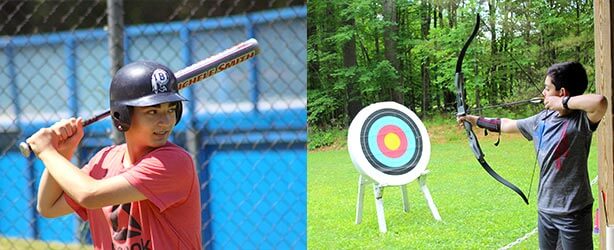
To pivot from nervousness to excitement, talk about the specific “firsts” they are looking forward to. Is it the first time they’ll hit a bullseye in archery? The first campfire s’more? The first time they see the Milky Way and the stars in the light-pollution-free New Hampshire sky? Shifting the conversation toward these tangible milestones helps them visualize success rather than focusing on the unknown.


The Director’s Perspective

Homesickness isn’t a “problem” to be fixed; it’s a milestone to be managed. It is actually a beautiful sign that your child has a home they love. By navigating those feelings and coming out the other side, your camper will develop a level of resilience that stays with them long after the buses return home from camp.

At Birchmont, we are ready for them. We pride ourselves on creating an environment where every child feels seen and supported, and I can’t wait to see your child grow this summer.

Yours in camping,

Will Pierce
Owner/Director, Pierce Camp Birchmont
What Is The Best Age To Go To Overnight Camp?

The best age to go to overnight camp depends on the individual child and their maturity level, interests, and comfort level with being away from home. However, many overnight camps typically accept children between the ages of 7 and 15. Here are some things to consider when determining the best age for your child to attend overnight camp:

Readiness for being away from home: Children who have previously attended sleepovers or been away from home for short periods of time may be more comfortable with the idea of overnight camp than those who have not. It’s important to consider your child’s comfort level with being away from home for an extended period of time and their ability to cope with homesickness.

Ability to follow rules and routines: Overnight camps have rules and routines that campers are expected to follow, such as set meal times and bedtimes, and regulations around personal conduct and behavior. Children who are able to follow rules and routines and understand the importance of respecting others may be better suited for overnight camp.

Interest in the camp’s activities: Overnight camps offer a wide variety of activities, from sports and outdoor adventure to arts and crafts and performing arts. It’s important to consider your child’s interests and whether the camp’s activities align with those interests. Children who are enthusiastic about the camp’s activities may be more likely to enjoy their time at camp and build strong relationships with their peers.

Maturity level: Some children may be more mature than others at a certain age, and it’s important to consider your child’s emotional maturity and ability to handle social situations, conflicts, and responsibility. A child who is mature for their age may be better suited for overnight camp than a child who is still developing these skills.

Overall, the best age to go to overnight camp varies from child to child, and it’s important to consider each child’s individual needs and interests when making the decision. It can be helpful to involve your child in the decision-making process and encourage them to share their thoughts and feelings about attending overnight camp.

Ready??! Request information about overnight camp here.

We Have Arrived!

After traveling in buses, planes, trains and automobiles, we are all here together getting comfortable in our cabins and learning to embrace camp life. Or as the kids say “ Living our best life!” 😎🌟💪🏻

Our first week has flown by and campers are not thinking so much now about their parents and pets they left behind, but rather have begun charting a new course making new friends, and trying new things here at camp…even for our many returning campers; this summer will be unique.

For some, leaving home is a bigger step than others. It takes time to make a friend. But we see connections happening all over camp. One of the great joys of camping is asking kids to take a leap and finding out they are flyers. Independence is a flight path with an upward trajectory, and this week we are onward and upwards to a great summer ahead.

After a hot and hazy opening week with lots of Double-Swim and melting ice cream, this week has been filled with perfect temperatures, clear blue skies and bright sunshine. 90% of our campers have now passed their laps at the waterfront and begun sailing, kayaking, paddle boarding and water skiing. Our waterfront staff is working hard with the campers who have yet to pass this deep water safety test. We have the luxury of time here at Birchmont; time to rise to a challenge and prevail. Campers who have chosen fishing or waterskiing club have had the extra privilege of seeing the sun dip behind the mountains as taps plays to end each evening.

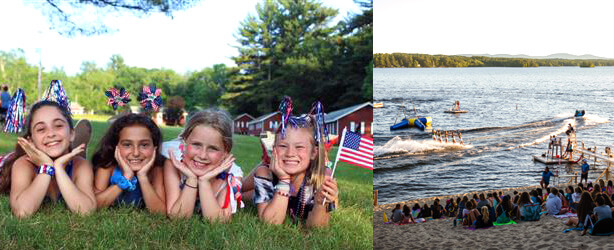
Our waterski show was a huge hit as the whole camp gathered on our beach to watch some spectacular skiing which hopefully will inspire our campers to try to get up on skiis themselves. When you have been around kids long enough you come to realize it’s true that the young mind is not a vessel that needs filling but wood that needs igniting. We hope to provide the spark, the magic, the guidance, and the fun this summer.

We have begun our Inter Camp Competition schedule with teams in swimming, soccer, basketball, and baseball. Our youngest girls and boys have met their Big Sisters and Brothers so they can greet each other throughout the camp day.

Our trip program began this week with Aquaboggan, Ogunquit Beach and Perkins Cove, Tubing down the Saco River, and our Pioneer and Explorer groups are having their overnights in the Orchard. We hope they see a moonrise and a thousand stars. It’s the best place on camp to take in a lake view and vast night sky.

On Saturday, we look forward to Spirit Day, a full day of fun and games with a rival camp with whom we have been enjoying spirited competition for many years. The silver spirit day trophy still rests on our Dining Hall shelf but it is ours to win or lose on Saturday. We are ready.

We hope you are enjoying our photos and first weekly video which should serve to give you a glimpse of what we are doing in this special place called Birchmont.

Still So Much To See And Do

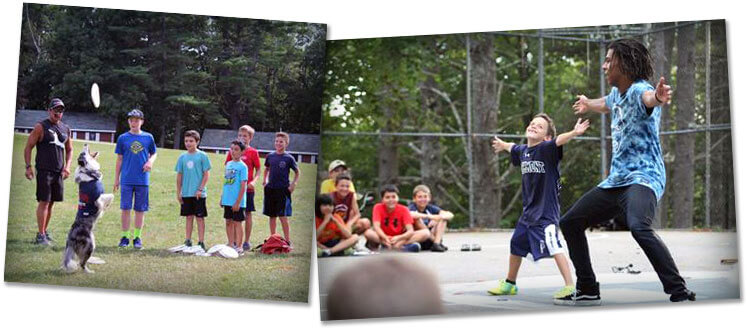
frisbee-dog-hiphop2

We are now officially into our second half of the summer, and all of us are here after arriving by cars, buses and planes. We hosted our 65th Parent Visiting Day on Saturday, and greeted our new campers on Sunday, and we are in full swing with camp activities and trips.

We enjoyed some great post Visiting Day entertainment this weekend with blow up rides, frisbee catching dogs and an outrageously great hip hop dance artist who involved our campers and counselors whose enthusiasm carried the night.

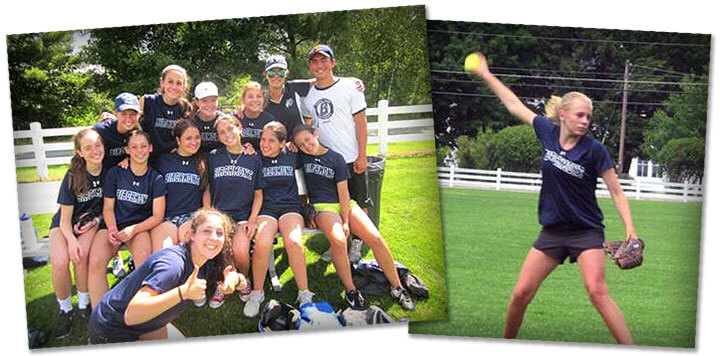
softball-girls2

Our girls Birchmont Braves softball team placed as finalists in the Tri-State softball tournament taking second place in a full day tournament off grounds with 5 other camps, bringing back lots of pride and a beautiful trophy we held high in our Dining Hall. Congrats to Paige Lind, Erin Ahern and Sophie Cowen for their dominating pitching skills.

Our weekly trips are still underway with our Super Senior group , climbing Mt Chocorua this morning. This legendary peak in the White Mountain range will give the climbers a view of three states from the summit. Our campers know the legend of Chief Chocoura as it is one of the most well told tragic tales in regard to Native American history in New Hampshire. Then it’s on to enjoy a dinner together to celebrate the climbers’ accomplishment at the popular restaurant, Poor People’s Pub.

The Senior boys and girls are enjoying a day at the beach. The Ogunquit beach in Maine just an hour away, offers some of the most beautiful coastline in New England, the swimming beach is vast and gorgeous, with the artist colony of Perkins Cove nearby waiting to be explored, many of our campers will be enjoying a classic “lobsta” dinner in the cove under a setting sun.
Our Pioneers and Explorers will be heading out to play on the water rides at Aquaboggan and Splashtown, followed by next weeks trips to the Polar Caves, and Lost River, both amazing natural sites in the area.

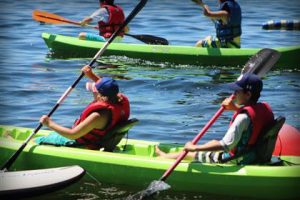
kayaking-lower-explorer-boys

Greg and I went kayaking yesterday afternoon with the Lower Explorer Boys. We were a colorful flotilla of 12 boats, some more experienced than others. We took off from our lake on a stunning day of sunshine and still waters. Everyone paddled down to the tributary about 1/4 mile away, portaging over a spit of sand leading us into the brook where we kayaked a few miles, through yellow flowered lily pads, to a beaver damn, seeing some painted turtles along the way.

I don’t bring my cell phone while kayaking, we have our radios, but I wish I had the phone as a camera. We saw a majestic eagle in the tree tops above us when we finished our paddle and went for a swim on the beach nearby. The eagle then soared over our heads, and we were all in awe, just for a moment , before splashing around and boarding our boats back to camp.

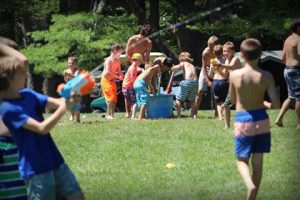
boys-water-fight

Pioneer girls enjoyed a campfire and some raspberry picking this week. And we know they had fun because we could hear their squealing to a campy combo of jokes and storytelling around the fire. The Pioneer boys and Super Senior boys bonded over water games on the field in front of their cabins with Head of boys camp Scott Shallcross and Group Leaders, Harris and Gary overseeing the fun.

We have so many camp highlights coming up… Bagel Sunday, Dance Socials, Aladin, the camp musical production, Booth Carnival, Color War, Song Fest, Banquet , and other surprises. We have many days of fun on the fields with our friends, and time in the lake to swim, sail, ski and relax. I could write more, but then I would be missing more of this wonderful camp day. Hope you are all enjoying your summer days too. We will try to keep you posted…

Week Four And There’s So Much More…

Week 3; Hitting Our Stride

Safe Waterfront for Lifeguarding Staff & Campers

This recent article from Camp Business illustrates how seriously we take waterfront safety here at Camp Birchmont. Our number one priority all summer long is to keep our campers safe and having fun.

Smooth Sailing At The Beach
Creating a safe waterfront for lifeguarding staff and campers
by Robert Attonito

It’s another spectacular New Hampshire afternoon at Camp Birchmont as I sit alongside Lake Wentworth, enjoying a moment of quiet. The lake is calm and crystal-clear, a young bald eagle floats high overhead, and a gentle breeze is the only thing to be heard. In the distance, the tranquility is broken by the sound of happy children rushing to their afternoon “free swim” period at what we simply refer to as “the beach.”

As waterfront director, my responsibility is to balance fun with safety, to allow just enough spirited play while maintaining a watchful eye in preventing incidents and accidents. At Birchmont and especially at the beach, creating a safe and secure environment for campers is still the top priority, while allowing them to learn new skills and have fun frolicking in what can be described as the perfect camp lake.

Start With Staff Members

To start the summer, the camp’s lifeguard orientation begins before all other staff orientations. Prior to arriving, all lifeguards receive emails that contain lifeguard manuals, a staff handbook, and other articles on camp and boat safety. All waterfront staff must study for and take the challenging New Hampshire Commercial Boat Licensing exam in accord with state requirements. From the time they are screened and eventually hired, all lifeguards are scrutinized for experience, certifications, and general knowledge as it pertains to both the camp experience and waterfront acumen. Creating a great espirit de corps among guards is essential in creating a high staff return rate among waterfront staff. During the extensive orientation, lifeguards are taught the skills they need to master before the children arrive two weeks later. Although most come with proper certifications, the entire waterfront staff benefits from a thorough review. The orientation time is spent on rescue skills, CPR/AED, and first aid. An emphasis on boating safety with the inherent dangers, as well as all waterfront policies and logistics, are covered to ensure an effective response to any incident. Our emergency-action plan is repeated often to ensure an immediate reaction. Skills are taught and reinforced throughout the summer and reviewed weekly by the waterfront directors, based on observations or incidents to guarantee there is no deterioration of skills and to combat complacency. Waterfront staff members are required to swim laps daily to build endurance and help fight fatigue. Once the members are ready and the kids arrive, we have a tradition of administering our own high-level swim test for each camper, prior to giving them full access to the lake.

Swim Tests

For us, morning instructional swim is not optional until campers have completed 7th grade, and/or have completed a vigorous deep-water swim test. Morning swim is comprised of three periods of American Red Cross swim instruction, which includes lessons for a wide range of ability levels, from novice swimmers to those pursuing a highly sought-after Lifeguard Training Certificate at age 15.

During the afternoon swim, campers are offered a wide array of choices, including a free swim, kayaking, sailing, skiing, paddle boarding, floating iceberg, and trampoline with a rope swing, and more! Having established a safe environment provides campers an envelope of security that promotes a love for the “beach.” Swim time remains as popular as ever, since the Pierce Family established the camp back in 1951. In fact, parents and campers looking for a traditional, big lake experience are drawn to Birchmont and beautiful Lake Wentworth! While we’d love to share all of the success stories of kids learning to ski, sail, wakeboard, swim, pass “LIT”, etc., this article’s focus is on some of the protocols and policies for safety we have adopted over the years.

What we do at the beach may not be for everyone, but we continually refine the program so it works well for today’s campers and adheres to our camp traditions. The hope is that readers might obtain an idea or reinforce one of their own practices so that all camps provide secure waterfronts.

Lake Wentworth is 13 miles in circumference, and at 3,097 acres, is the seventh-largest lake located entirely in New Hampshire. Campers need to be confident swimmers, even with the use of life preservers, which are required once outside the roped-in swim area. To that end, we adhere to a deep-water test that consists of a lap requirement (approximately a 200-yard continuous swim), which campers must pass in order to gain access to the lake at large for boating (sailing, canoeing, paddle boarding, kayaking), waterskiing, wake boarding, and/or tubing. Not only is the policy safer in the long run, but it becomes a clear esteem-booster as campers are always recognized for their efforts by staff and peers. Once children do pass, a myriad of activities are open to them, regardless of age. In fact, we encourage children to try every waterfront activity that is offered as an integral part of camp life.

Keep Staff On Their Toes

As director, my major focus is on constantly watching over my staff of 18+ members to ensure they maintain the safest possible waterfront protocols that include the “five-minute scan” developed at Penn State University and the RID factor, recognized by the American Red Cross. Additionally, we use the buddy system for all campers and staff, who also must pass a required staff swim test. In addition to myself as the director, the staff hierarchy at the waterfront includes my longtime assistant director, Polly Goldman (W.S.I.), followed by three team captains who are senior lifeguards, and who supervise a team of six other guards. Every afternoon (consisting of three activity periods), each team rotates between lifeguarding, sailing, and waterskiing, keeping individuals fresh, and yet working as a team that is familiar with one another. Instilling a true family atmosphere that includes the directors and the entire staff creates a vested interest in not letting each other down. We make sure staff members know that “bad things can and do happen to everyone,” regardless of the camp or program. In that regard, a healthy sense of fear help keep lifeguards on point for the entire summer.

One final distinction is that the beach is always closed to visitors, campers, staff members, and even owner/directors when lifeguards are not on duty.

Explore And Excel

We want all campers to have fun, and we encourage them to truly enjoy the beach and all of the waterfront activities, not only the ones within their comfort zone. Having a large, well-trained, and competent lifeguarding staff is essential to maintaining that safe environment for children to explore and excel!

Ultimately, all of these efforts and protocols lead to a safe and rewarding waterfront experience, and one that for 65 summers has left campers running back to the beach for more!

Robert Attonito is a retired N.Y. teacher, coach, wrestling official, and fireman from Deer Park, N.Y. He is an AMT, a WSI since 1964, and member of the National Wrestling Hall of Fame. “Bobby” has been at camp since 1954 as a young camper, and is now considered a Birchmont living legend.