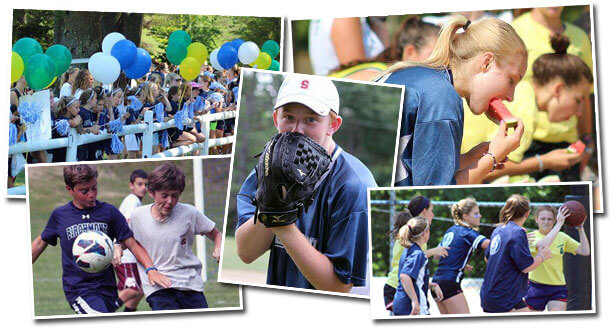
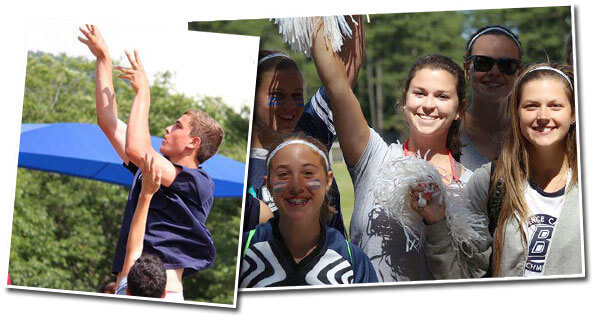
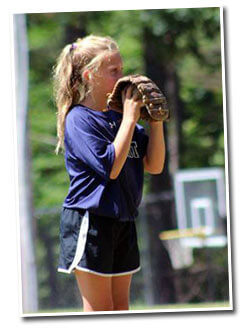
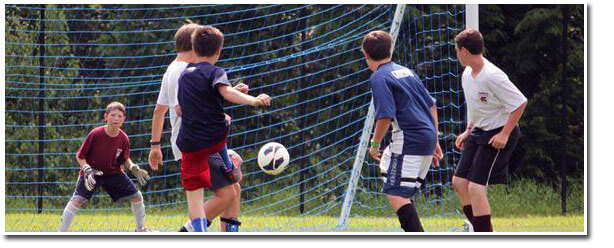
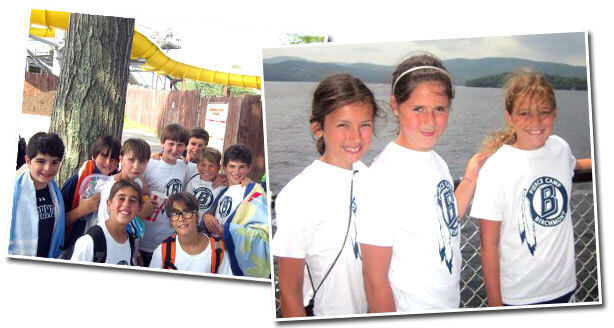
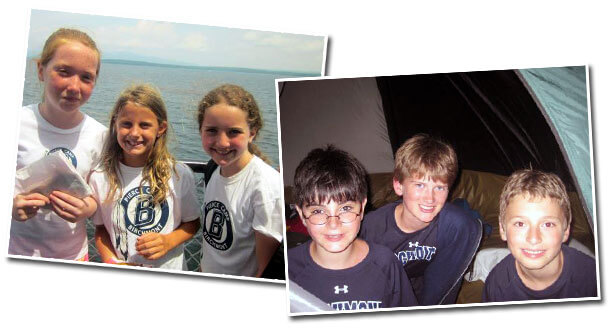
In our modern, high-achieving world, a child’s life is often a masterpiece of logistics. Between competitive sports, music lessons, or tutoring, every hour of their day is optimized for achievement. At the same time, game consoles and on-demand TV often usurp free play and are constantly present to fill the gaps that used to be filled with some of the boredom that led children into self-directed play. As a result, the “free play” that defined previous generations has shrunk to a much smaller part of childhood and can sometimes feel like a luxury to today’s child.
At Pierce Camp Birchmont, we certainly have a robust and professional schedule of activities. However, we also believe that some of the most profound growth happens during our intentionally scheduled blocks of unstructured time.
Whether it’s the “Rest Hour” that occurs every day after lunch, smaller breaks around meal times, or our dedicated “Option Sunday” afternoons, these blocks of time are a vital part of the Birchmont curriculum. Here is why providing unscheduled time in a child’s schedule is essential for their development.
1. Free Play Is The Engine of Creativity
When a child is handed a tablet or a pre-set activity, their imagination is in the passenger seat. But when a group of campers is given an hour of unstructured time, their creativity takes the wheel.
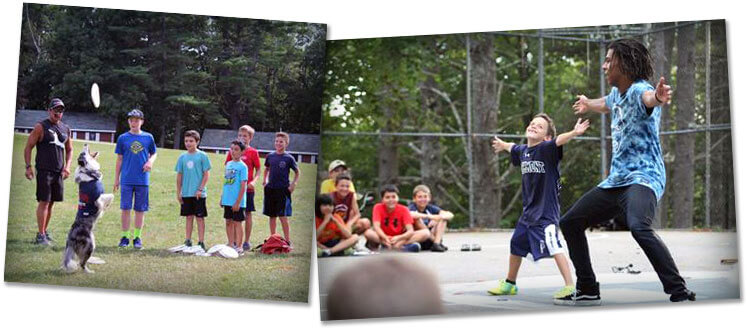
I’ve watched campers turn a few fallen branches into an elaborate village or invent their own sports. A perennial favorite at Birchmont is “Roof Ball”, a game that wasn’t created by a coach or a director, but emerged naturally from the campers themselves during their free time. This isn’t just passing time; it is the development of divergent thinking. By having the space to decide what to do next, children learn how to generate their own ideas rather than just consuming the ideas of others.
2. Building Social Intelligence in the Gaps
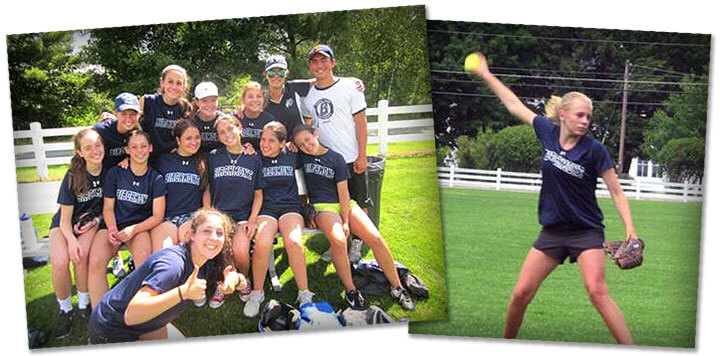
During Rest Hour, children are the primary navigators of their own social world. They are allowed to rest in the bunk, roam freely within their respective camp areas (Boys’ Camp or Girls’ Camp), or engage in spontaneous pickup games of tennis or basketball.
In these moments, children mediate their own interactions and organize the fun. Campers have to negotiate the rules of their games, decide who is on which team, and resolve the small, daily frictions of communal living. These unstructured moments are where true social intelligence is built. Campers learn the art of compromise, the value of leadership, and how to read the room—skills that are increasingly rare in an over-monitored world.
We train our counselors to allow this to happen and to only intervene and guide as necessary. Sure, this actually creates a little more work for us since managing this time is slightly more complex than organized activities, but we feel that the benefits it provides our campers and the depth it brings to the camp experience is well worth it.
3. Developing Executive Function
Executive function is the ability to plan, organize, and execute tasks. In an overscheduled life, a child’s executive function often goes dormant because someone else (a parent, a coach, a teacher) is doing the planning for them.
During Option Sunday, a camper has to ask themselves: “How do I want to spend my afternoon? Who do I want to play with? What equipment do I need to ask for?” This self-directed planning is a major milestone in a child’s journey toward independence. It allows them to practice being the “CEO of their own time” in a safe, supportive environment.
4. Recalibrating the Nervous System
Unstructured time allows for a mental reset. In a world of constant performance and external evaluation, children need moments where nothing is being graded or tracked.
This isn’t about doing nothing; it’s about doing something purely for the joy of it. Whether it’s a quiet conversation between cabinmates on the bunk porch, reading a book under a tree, or a spontaneous game of catch, this downtime reduces the performance anxiety that so many children carry today. It teaches them that their value isn’t just tied to their achievements, but also to their presence and their friendships.
The Director’s Perspective
We want our campers to leave Birchmont as creators, not just participants.
As a child development professional, the irony of scheduling unscheduled time is certainly not lost on me. By protecting these blocks of unstructured time, we are giving our campers the chance to discover their own interests, build deeper friendships, and learn that they have the internal resources to navigate their own world.
We provide the setting and the safety, but the campers provide the magic. I can’t wait to see what games and memories they create this summer in the “white space” of Rest Hour, Option Sunday, and all those little moments camp provides for kids to just be kids.
Yours in camping,
Will Pierce
Owner/Director, Pierce Camp Birchmont